Chinese Art Deco Rugs: History, Style & Value
What Makes Chinese Art Deco Rugs So Distinctive?
Chinese Art Deco rugs are among the most recognizable hand-knotted carpets of the early twentieth century. Known for their bold colors, artistic patterns, and unusual compositions, these rugs combine traditional Chinese craftsmanship with the modern design movement of the 1920s and 1930s.
Unlike many traditional Oriental rugs, classical Chinese Art Deco carpets often feature large areas of open color, asymmetrical floral designs, and unexpected combinations of rich blues, greens, pinks, and golds.
Today, collectors and interior designers appreciate these rugs for their artistic character and versatility. A century after their introduction, they remain a compelling choice for both historic and contemporary homes.

What Are Chinese Art Deco Rugs?
Antique Chinese Art Deco rugs are hand-knotted carpets that became especially popular during the 1920s and 1930s. Many were woven in Tianjin, historically known as Tientsin, a major center of Chinese rug production.
Their development coincided with the international Art Deco movement, which embraced strong colors, simplified forms, decorative geometry, and modern luxury.
The movement gained international recognition following the 1925 International Exhibition of Modern Decorative and Industrial Arts in Paris. Its influence soon appeared in architecture, furniture, fashion, and textiles.
Chinese rug makers adapted this design language while preserving elements of their own artistic traditions.
The resulting carpets often featured:
- Stylized flowers, birds, butterflies, and botanical designs
- Rich, saturated colors combined with softer backgrounds
- Asymmetrical arrangements rather than centered medallions
- Open fields that allowed individual motifs to stand out
- Deep wool pile, sometimes with carved or sculpted details
This combination of traditional craftsmanship and modern design gave Chinese Art Deco rugs an identity that still feels remarkably current.
Who Was Walter Nichols, and Why Are Nichols Rugs Important?
Walter Nichols was an American entrepreneur whose rug workshops in Tianjin helped popularize Chinese Art Deco carpets during the 1920s and 1930s.
Nichols recognized the appeal of combining traditional Chinese weaving techniques with designs suited to American and European interiors.
His workshops produced distinctive carpets featuring luxurious wool pile, vivid colors, and decorative motifs arranged in unconventional ways.
Early examples often featured brilliant colors and elaborate floral elements. Other designs became more restrained, using broad fields of color with small decorative arrangements or subtle geometric patterns.
Today, Nichols rugs are especially recognized within the world of collectible Chinese Art Deco carpets.
However, not every Chinese Art Deco rug is a Nichols rug. Other weaving workshops also produced beautiful examples during the same period.
For collectors, identifying the actual workshop can be important. The Nichols name should only be applied to a particular rug when its attribution can be supported.
The history of these carpets is part of their appeal. They reflect a fascinating period when traditional Chinese textile craftsmanship encountered the changing tastes of the modern world.

What Makes Chinese Art Deco Rugs Different From
Traditional Chinese Rugs?
Chinese Art Deco antique rugs differ from many earlier Chinese carpets through their bolder colors, more open compositions, and willingness to depart from traditional symmetrical layouts.
These characteristics make them particularly interesting to collectors who appreciate both historic textiles and modern art.
Bold, Unexpected Colors
Traditional Chinese rugs frequently used restrained combinations of blue, ivory, beige, and other muted tones.
Art Deco designs introduced more dramatic combinations. Deep turquoise, emerald green, ruby red, lavender, golden yellow, and vivid pink became important features.
Some rugs use one dominant background color with a contrasting floral motif. Others combine multiple colors for a more expressive effect.
Asymmetrical Designs
Many traditional Oriental rugs feature a central medallion or repeating pattern.
Chinese Art Deco designs often break away from that structure.
A flowering branch might appear in one corner, while a bird or vase balances the composition elsewhere. Large areas of uninterrupted color give these motifs room to breathe.
That sense of space is one reason Chinese Art Deco rugs work so well with contemporary furniture.
Traditional Chinese Symbolism
Even as their designs became more modern, many carpets retained imagery drawn from Chinese decorative traditions.
Cranes, dragons, flowers, butterflies, and other natural motifs may carry cultural associations with longevity, prosperity, or good fortune.
These details connect the rugs to a much longer artistic history.
A Distinctive Texture
Many period Chinese Art Deco rugs feature a thick, soft wool pile. Some also include carved detailing that creates definition around flowers, leaves, or geometric shapes.
Materials and construction vary by piece, making individual examination important.
For anyone interested in seeing how historical design influences modern interiors, these rugs offer a wonderful example.
How Can You Recognize an Authentic Chinese Art Deco Rug?
Authenticating a Chinese Art Deco rug requires examining its construction, materials, design, age, and condition. Appearance alone cannot establish whether a carpet is an original period piece or a later reproduction.
Several characteristics can help guide an evaluation.
1. Examine the construction.
Many original Chinese Art Deco carpets were hand-knotted using wool pile. Examining the back of the rug can provide clues about its weaving structure.
However, hand-knotted construction alone does not establish age or authenticity.
2. Consider the design and color palette.
Period examples often feature saturated colors, open compositions, and stylized Chinese imagery.
These features can support an identification, but modern rugs can reproduce the same visual characteristics.
3. Look for identifying marks or documentation.
Some Nichols rugs have surviving manufacturer markings or other identifying features.
Provenance, previous ownership records, and any available documentation may help establish a rug's history.
A missing label does not automatically mean a rug is inauthentic.
4. Evaluate the condition.
Carefully examine the rug for:
- Areas of worn or missing pile
- Previous repairs or restoration
- Damage to edges and fringes
- Color changes or uneven fading
- Signs that the rug has been reduced in size
Condition matters both to collectors and to homeowners planning to use the rug regularly.
5. Confirm the approximate age.
A Chinese Art Deco rug may be described as antique, vintage, or simply Art Deco in style.
These terms are not interchangeable.
Generally, rugs more than 100 years old are classified as antique. A genuine example woven in the 1930s would generally still be considered vintage in 2026, even though it belongs to the original Art Deco period.
An experienced rug dealer can help evaluate these distinctions before a purchase.

How Do You Choose a Chinese Art Deco Rug for a
Modern Home?
Chinese Art Deco rugs can work beautifully in contemporary interiors because their open designs and expressive colors provide visual interest without requiring an equally ornate room.
Their versatility is one of the reasons these carpets remain relevant to interior designers today.
Let the Rug Introduce Color
A Chinese Art Deco rug can establish a room's color palette.
A turquoise or blue carpet might complement neutral upholstery, while a rug featuring pink, gold, or green can introduce warmth to a quieter interior.
Rather than matching every color exactly, consider allowing the rug to become the focal point.
Pair Historic Rugs With Contemporary Furniture
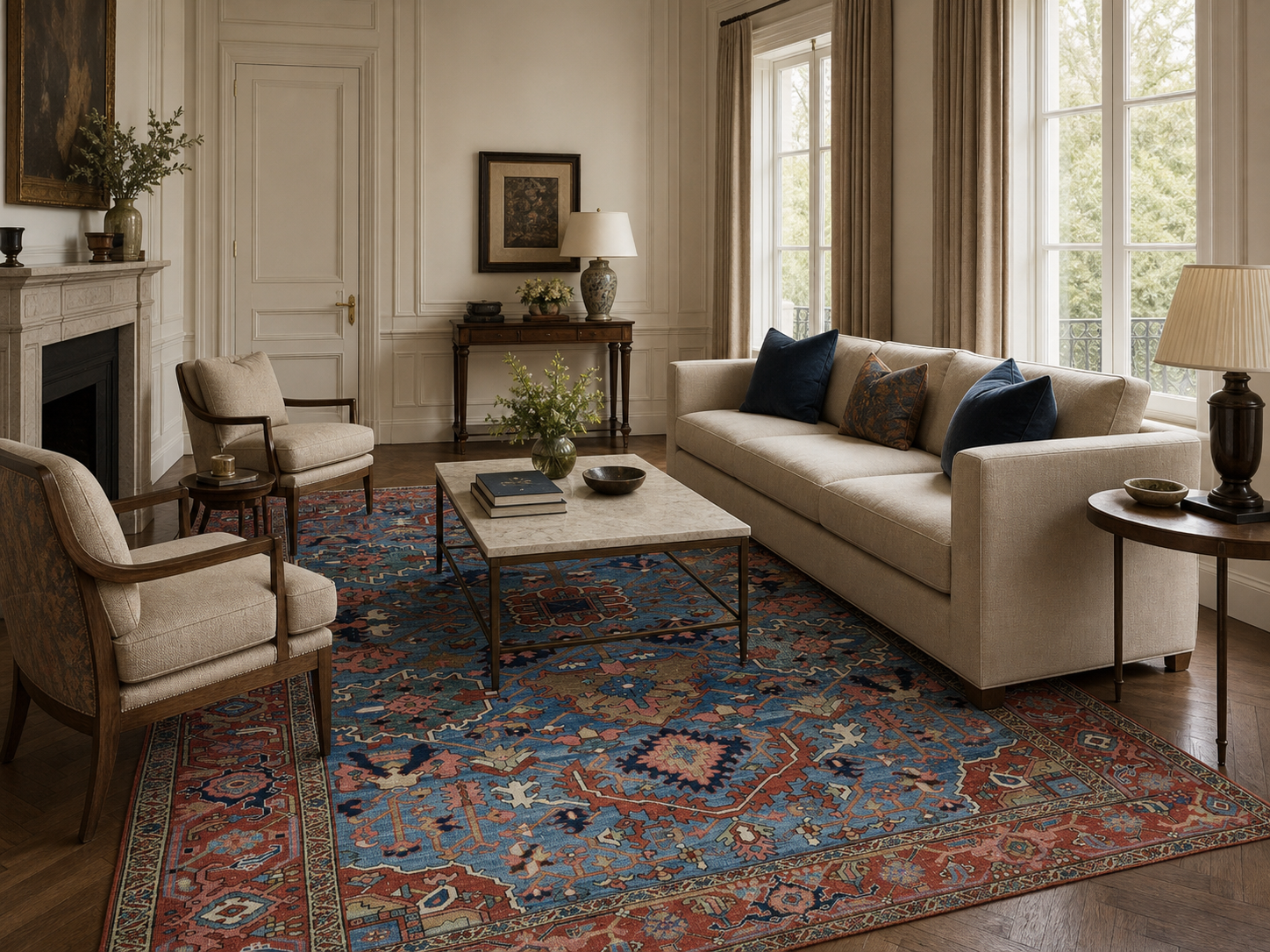
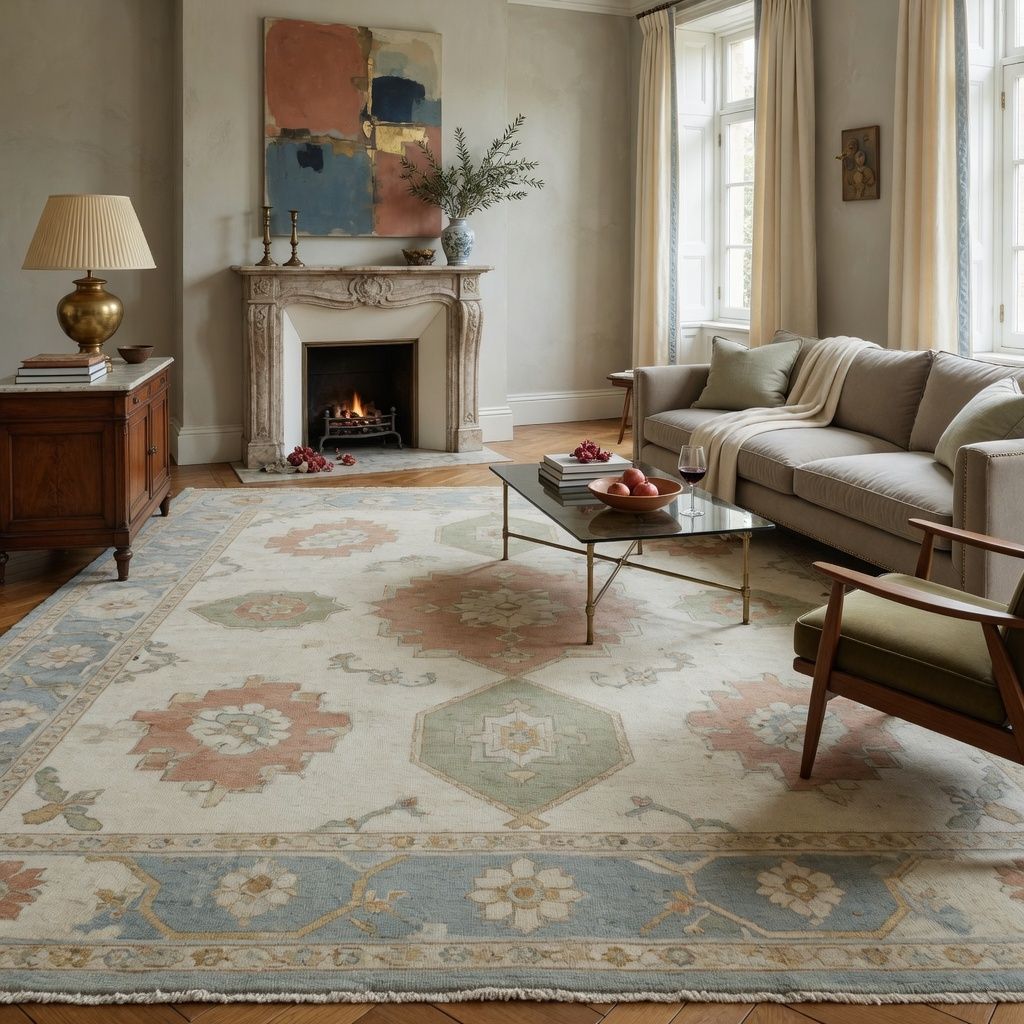
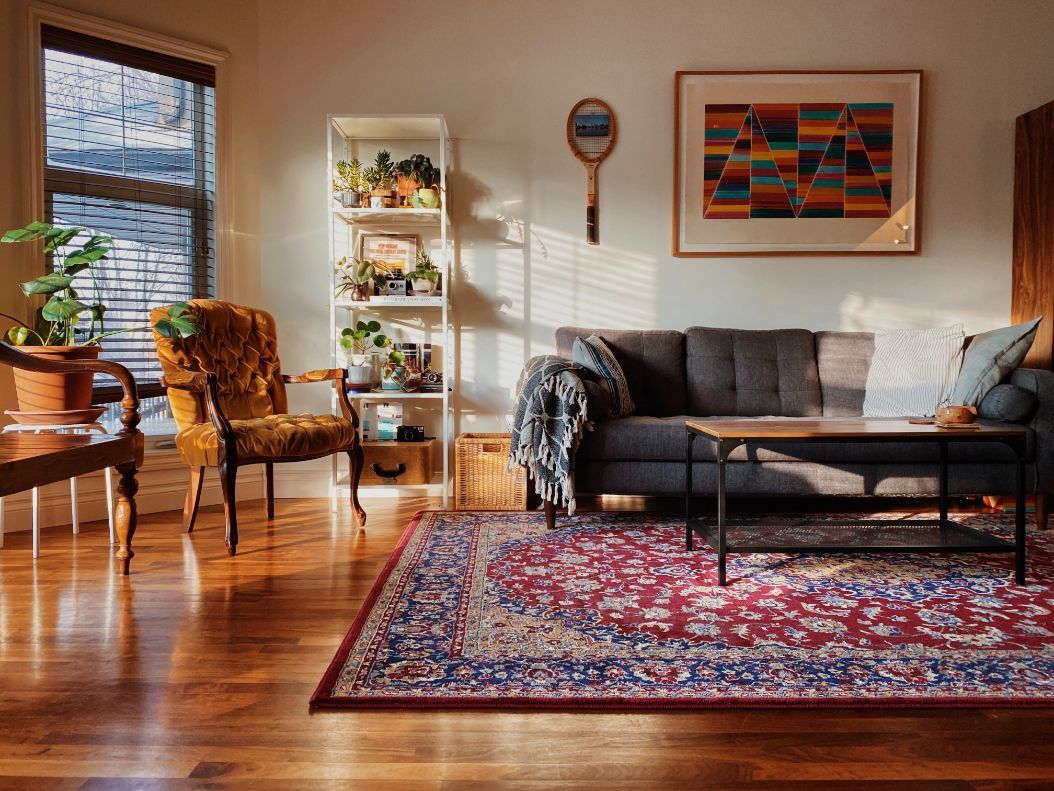
One of the most appealing qualities of Chinese Art Deco rugs is how naturally they complement modern furniture.
Their simplified motifs and open compositions work with clean-lined sofas, sculptural chairs, natural wood finishes, and contemporary lighting.
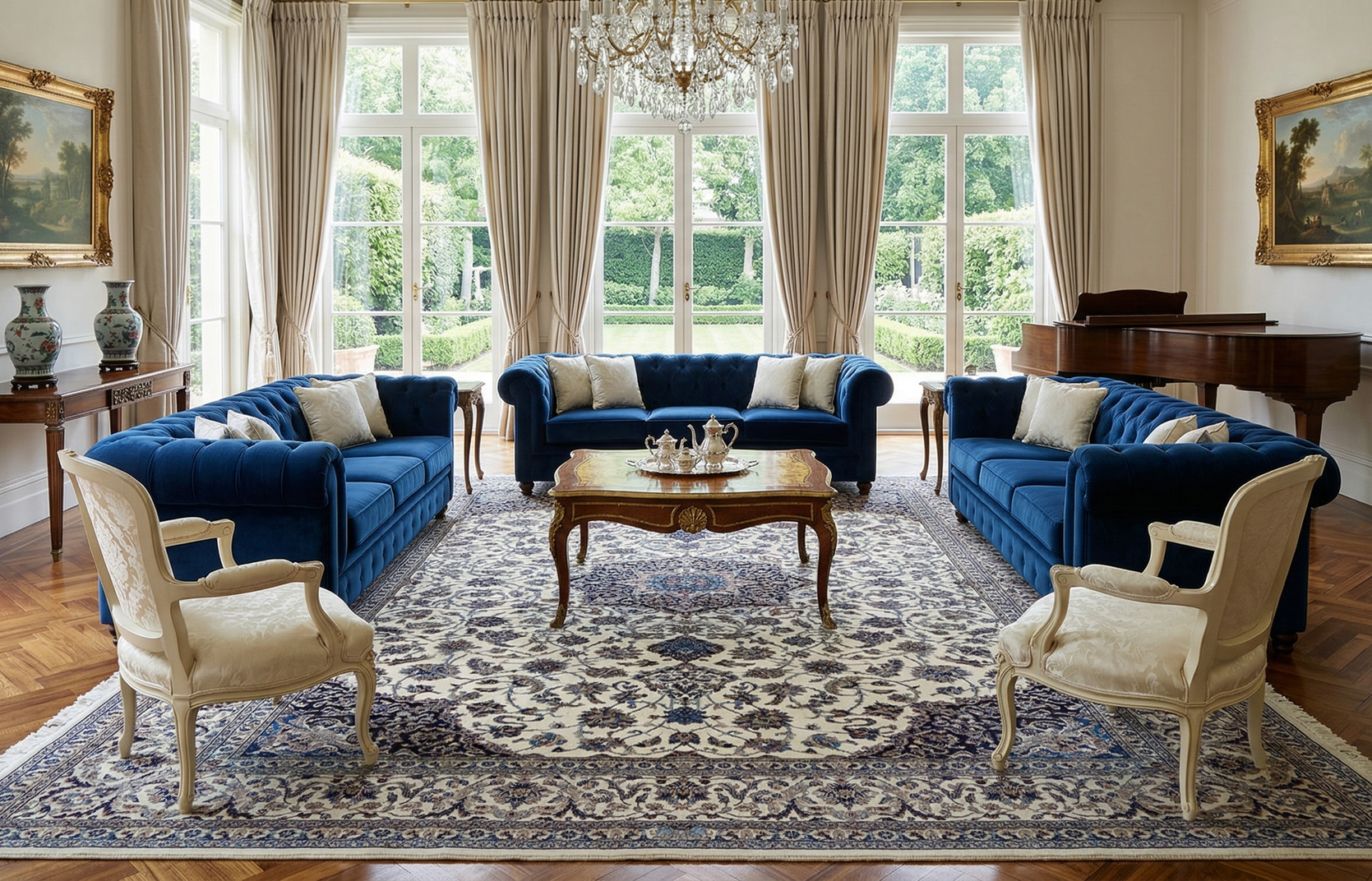
They can also create an unexpected connection between antique furnishings and newer pieces.
In a historic New England home, a Chinese Art Deco rug may introduce a fresh layer of color while respecting the character of the architecture.
Choose the Right Size and Condition
Before purchasing, measure the room and consider how the rug will relate to the furniture.
A larger rug can anchor a living room, while a smaller piece may add character to a bedroom, study, or seating area.
For antique and vintage rugs, condition is equally important.
A rug intended for an active family room may have different requirements from a collectible piece used in a quieter space.
Consider the Rug's Individual History
Not every Chinese Art Deco rug is associated with a famous workshop, and a recognizable design does not automatically make a piece more valuable.
Age, provenance, craftsmanship, condition, rarity, size, and artistic appeal all influence desirability.
Working with an experienced rug dealer helps buyers understand these details and choose a piece that suits both their home and their collecting interests.
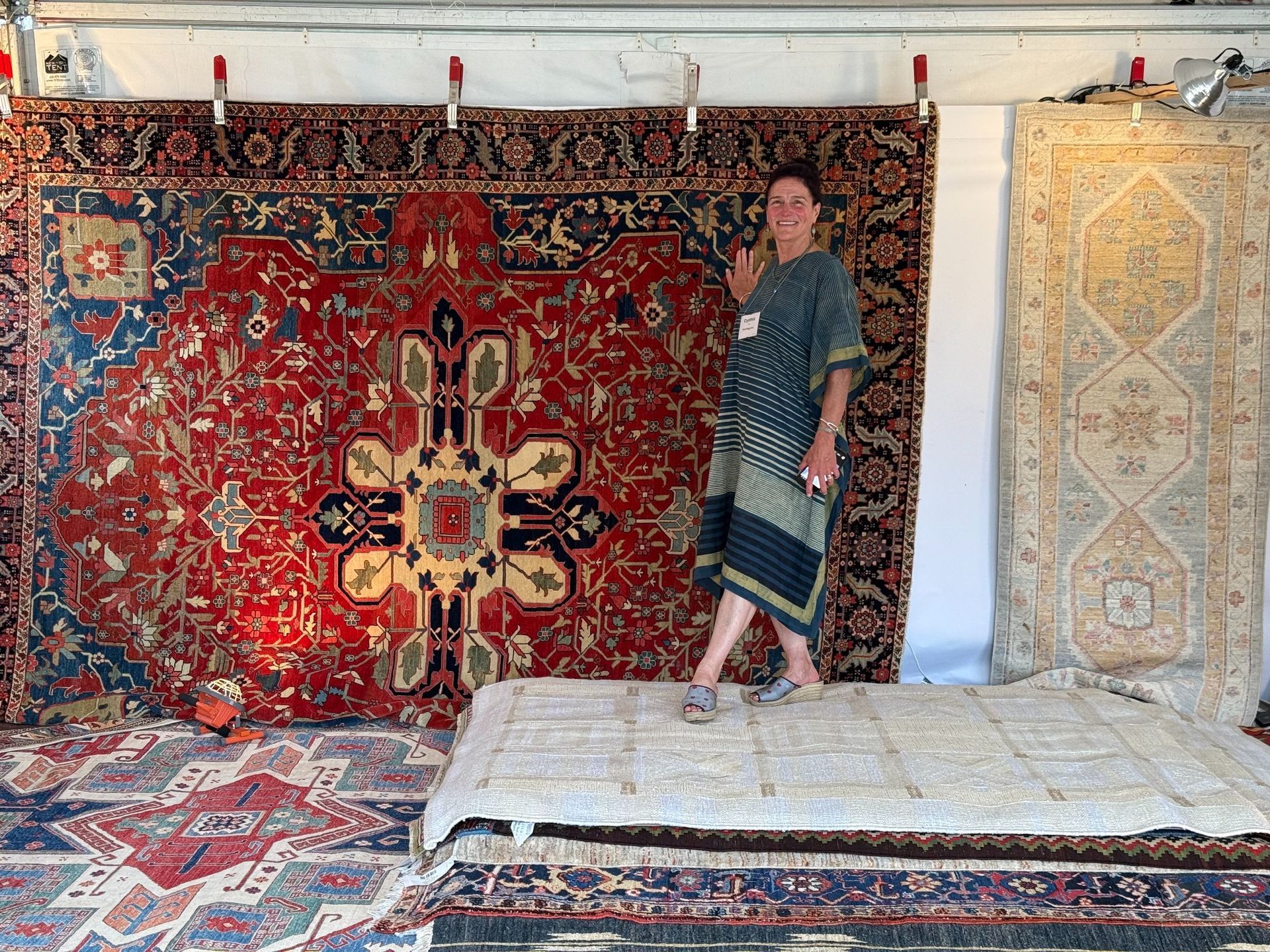
At First Rugs, Cynthia First brings more than 25 years of experience sourcing fine hand-knotted rugs from around the world. Her background in antiques and art helps homeowners and designers consider both the decorative appeal and historical significance of a rug.
Discover the Art of Chinese Rugs at First Rugs
Chinese Art Deco rugs represent a remarkable meeting of tradition and modern design.
Their distinctive colors, creative compositions, and hand-woven artistry continue to appeal to collectors and homeowners seeking something beyond conventional floor coverings.
Whether you are drawn to the colorful designs of the 1920s, the restrained elegance of later pieces, or the broader history of Chinese carpet weaving, finding the right rug begins with understanding what makes each piece unique.
First Rugs specializes in fine antique, vintage, and hand-knotted rugs, with showrooms in Acton and Boston's SoWa Art+Design District.
Explore our collection or contact First Rugs to schedule a personal rug consultation. Our team can help you discover a rug with the history, craftsmanship, and character to become part of your home for years to come.
Frequently Asked Questions About Chinese Art Deco Rugs
Q: Are Chinese Art Deco rugs valuable?
A: Authentic period Chinese Art Deco rugs can be collectible and valuable, particularly examples with desirable designs, documented origins, and good condition. Rugs attributed to recognized workshops, including Walter Nichols, may attract special interest. Value depends on the individual piece and should be evaluated professionally.
Q: Are all Chinese Art Deco rugs antique?
A: No. Although the style became popular during the 1920s and 1930s, not every rug featuring an Art Deco design is antique. Some original period rugs are still classified as vintage, and contemporary rugs may use similar patterns and colors.
Q: What is a Nichols Chinese Art Deco rug?
A: A Nichols rug is a carpet associated with the workshops established by Walter Nichols in China during the early twentieth century. These rugs are known for their distinctive Art Deco styling, rich colors, and traditional weaving craftsmanship.
Q: Can Chinese Art Deco rugs work with modern furniture?
A: Yes. Chinese Art Deco rugs are especially compatible with contemporary and transitional interiors. Their open compositions and expressive colors can complement clean-lined furniture while adding the individuality of a historic textile.
Q: Where can I find antique and vintage Chinese rugs near Boston?
A: First Rugs offers a collection of antique, vintage, and hand-knotted rugs at its flagship showroom in Acton, Massachusetts, and its Boston SoWa location. Contact First Rugs to inquire about current Chinese Art Deco rug availability or arrange a design consultation.